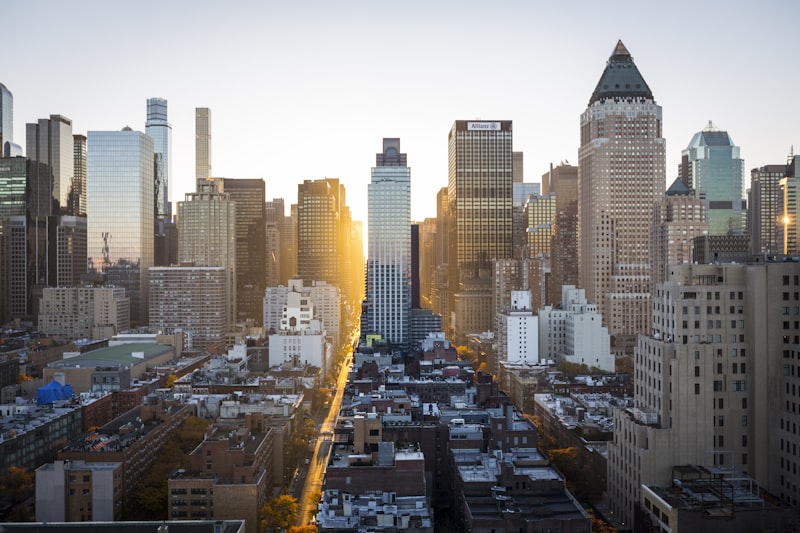
Anyone who has played a satellite-imagery guessing game for long knows the pattern. Drop into a major city and you can usually place yourself within a country in seconds. Building density, road style, vegetation, the colour of the rooftops — there are dozens of signals fighting for your attention. Drop into a featureless patch of rural forest in central Russia or northern Canada and you are guessing between vast areas with very little to distinguish them. Some frames are simply much harder than others, and the urban-rural distinction is the dominant factor.
This is not a bug. It reflects something fundamental about how human activity is distributed across the planet. Cities are dense both in population and in the kinds of cues a satellite image can show — road patterns, building styles, vehicles, vegetation, signs of industry. Rural land is sparse in all of those things. The harder frames are not arbitrarily harder; they are harder for a reason worth understanding.
Why cities are easy
A satellite frame over a city contains an enormous amount of information per square kilometre. Most of it falls into a handful of categories that vary distinctively between regions:
- Street geometry: grid layouts dominate American cities and Soviet-planned cities. Organic, winding streets dominate older European cities. Diagonal radial avenues are a Parisian or post-Haussmann signature. Cul-de-sac suburbs are an Anglo-American twentieth-century pattern.
- Building density and height: skyscrapers cluster in specific cities and few of them. Mid-rise apartment blocks of a particular style — the prefabricated panelák blocks of central Europe, the brutalist mikrorayon blocks of the former Soviet Union, the Mediterranean white-walled flats — are diagnostic of their regions.
- Rooftop colour: terracotta in Mediterranean countries, dark slate in northern Europe, white-painted concrete in much of the Arab world, corrugated metal in much of the developing tropics. A single low-altitude frame can place a city by rooftop colour alone.
- Vegetation in cities: tree-lined boulevards are heavily European. Strip-mall parking lots with sparse landscaping are heavily American. Palm trees in city parks are Mediterranean, Californian, Floridian, or tropical Asian.
- Infrastructure: tram lines, river quays, motorway interchanges, port cranes, stadiums. Many cities have a single feature that gives them away unmistakably.
A skilled player landing in an urban frame is not relying on any one of these cues. They are reading several at once and triangulating. By the time they place the guess, three or four cues have lined up to point at the same answer. That is what makes city frames a relief.
Why rural is hard
Rural land takes up most of the planet's surface, and the variation between regions is much subtler than it is in cities. Two thousand kilometres of boreal forest in central Siberia looks not very different from two thousand kilometres of boreal forest in central Canada. Two hundred kilometres of semi-arid grassland in central Spain looks not very different from the same in central Australia. The signals are there, but they are subtle and require careful reading.
Rural cues tend to be lower-information per glance. Field shape and size, road width and surface, the colour of the soil, the species mix of the vegetation, the presence or absence of fencing — none of these scream their country the way a Parisian boulevard does. A rural player is making finer-grained comparisons against a less varied dataset.
There is also a brutal practical asymmetry. Cities cover roughly three percent of the world's land area. Rural land covers the rest. A random satellite frame is far more likely to be rural than urban, which means the hardest frames are also the most common.
The categories of "hard"
Within rural frames, there is a clear hierarchy of difficulty. Some kinds of rural landscape are harder than others, and learning which category a frame falls into is the first step to playing it well.
- Boreal forest: dense conifer canopy with scattered lakes. Extends across Canada, Alaska, Scandinavia, and Russia. Among the hardest single biomes to disambiguate because the underlying landscape is so similar across all four.
- Steppe and prairie: open grassland with very few trees, rectangular fields, sparse settlements. Eurasian steppe, North American prairie, and Argentine pampas all share the general look. Subtle cues — road colour, fence style, type of cattle — separate them, but you need to look hard.
- Hot desert: dunes, gravel plain, the occasional dry riverbed. Sahara, Arabian, Gobi, Atacama, central Australian. Some have distinctive features (the iron-red colour of Australian central deserts, the brilliant white of Atacama salt flats), but a pure dune frame can be very hard to place.
- Tropical rainforest: continuous green canopy with rivers cutting through. Amazon, Congo, Borneo, New Guinea, parts of Central America. The underlying canopy looks similar; the cues come from the rivers visible in the frame.
- Mountain interiors: high alpine country with bare rock, snow patches, and very few signs of human activity. The Andes, the Himalayas, the Rockies, the Alps, central Asia. Mountains are visually striking but often genuinely ambiguous.
How to play hard frames
The most useful habit on a hard rural frame is to slow down and read the layers in order. Climate first — what biome are you in? Vegetation second — what species dominate the visible canopy? Water third — is there a river visible, and if so what direction is it flowing? Cultural fourth — any sign of roads or settlement, however faint?
Strong players also use a particular trick on rural frames: they look hard at the edges. A satellite frame might be 80 percent featureless forest, but the corners often catch a glimpse of a road, a clearing, a power line, or a transition zone where the forest meets something else. Those edge features are disproportionately informative compared to the bulk of the frame.
When all else fails, guess based on biome probability. Boreal frames are most likely to be Russia or Canada, in that order, because those two countries contain the majority of the world's boreal forest. Hot desert frames are most likely to be the Sahara, then Arabia, then Australia, by area. This is not a satisfying way to play, but it minimises expected distance error when you genuinely cannot read the frame.
Why the asymmetry is worth keeping
A reasonable question is whether a game should serve up disproportionate numbers of hard rural frames. The answer is that the asymmetry is the whole point. A game that only used urban frames would be a city-recognition game, not a geography game. The reason satellite-imagery games are good for building real geographic intuition is that they force you to engage with the parts of the planet you would otherwise never look at — the steppe, the boreal forest, the empty desert. That is where most of the planet actually is.
The players who get good at this game are the ones who learn to play the hard frames as well as the easy ones. Cities are the warm-up. The hard work, and the real geographic learning, is everything else.