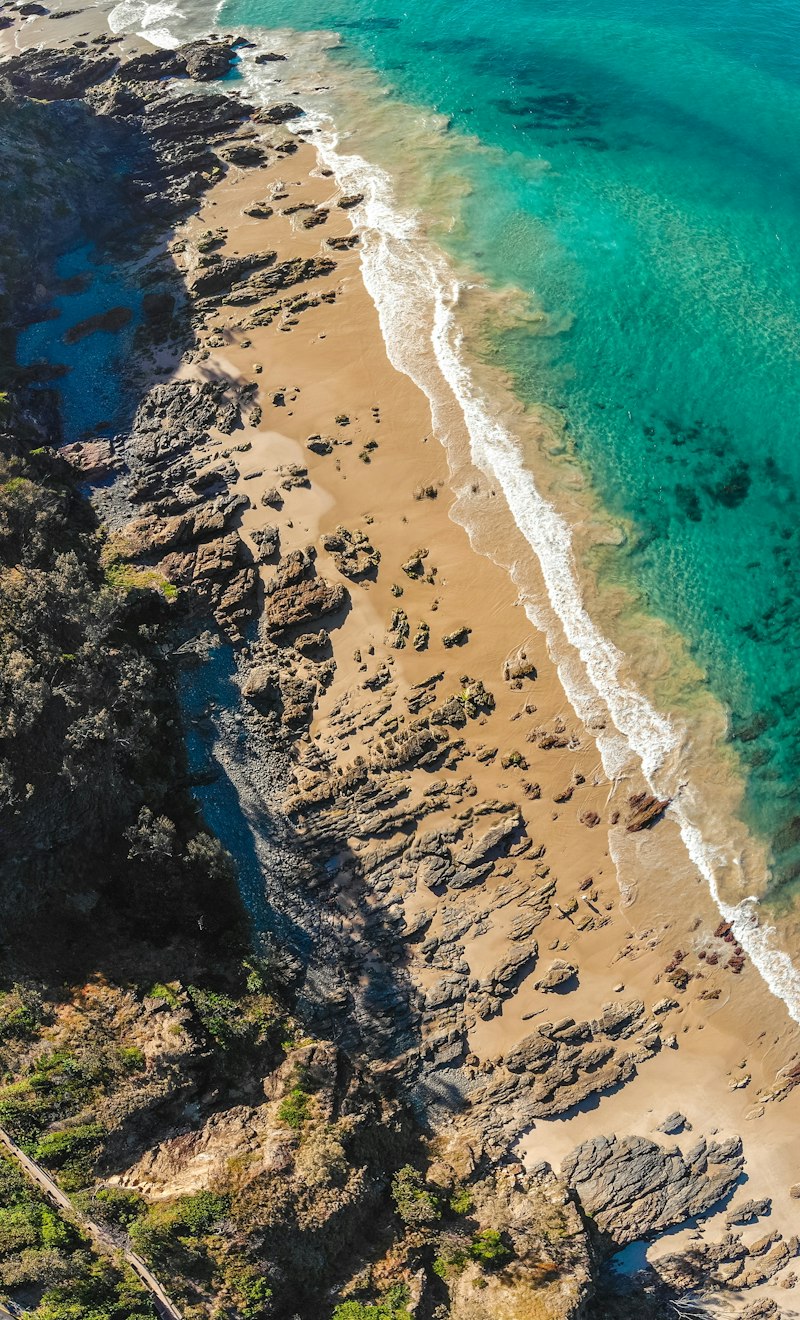
If you have played a satellite imagery game for any length of time, you know the feeling. The round loads. The image appears. And there is — quite literally — nothing. Sand to the horizon. Forest stretching uniformly in every direction. A featureless ocean. White ice on white ice. Most rounds in a satellite guesser are won or lost on the clues you can find. Some rounds offer no clues at all.
These are the hardest images in the genre. They strip away every familiar handhold a player relies on — no roads, no fields, no cities, no coastlines, no labels — and leave you with raw landscape. They are also, in a strange way, the most educational rounds in the game. The strategies for cracking them force you to think about how big the planet is, how its biomes are distributed, and what subtle visual signatures remain when the obvious ones disappear.
Here are the hardest categories of place to identify from satellite imagery, why each one is hard, and how experienced players actually approach them.
1. The Featureless Interior Sahara
The Sahara covers about 9 million square kilometres — roughly the size of the contiguous United States — and from above, vast portions of it look almost identical. Sand dunes in one corner of the desert look like sand dunes in another corner. Rocky plateaus called hammadas are similarly indistinct. Salt flats are salt flats. A satellite round drops you onto pale ochre terrain with no roads, no settlements, no rivers, no vegetation — and you have to figure out which thousand-kilometre patch of desert you are looking at.
The strategy: look for the rare structural features. Erg Chebbi (in Morocco) has a distinctive dune morphology, as does the Murzuq Sand Sea (in Libya). The Ennedi Plateau (in Chad) has dramatic rock formations rather than dunes. The colour shifts subtly across the Sahara — more orange in some regions, more pale in others, with darker volcanic rock in places like the Hoggar (Algeria) and Tibesti (Chad). Most players will not learn these distinctions in their first hundred rounds. Players who play hundreds of rounds eventually pick up the differences, and the same desert that looked uniform starts to feel like a place with internal regions.
2. The Siberian Taiga
Siberia's boreal forest — the taiga — covers an area roughly the size of the United States and Canada combined. From above, it presents as an endless dark green canopy stretching from the Urals to the Pacific, punctuated only occasionally by rivers and the rare road. There are no cities for hundreds of kilometres at a time. Even when there are, they are tiny dots that the satellite imagery often misses entirely at the player's default zoom level.
The strategy: rivers and water bodies are almost the only handhold. The Ob, Yenisei, and Lena are three of the longest rivers in the world and they bisect Siberia from south to north. If you can identify a major river — by its width, its meander pattern, or its delta — you can place the round to within a few hundred kilometres. The colour of the water (clearer in the eastern rivers, more sediment-loaded in the west), the presence of seasonal ice, and the texture of the surrounding forest all help, but the river itself is the primary clue. Without a river or a clearing, the round is a guess.
3. The Open Ocean
Ocean rounds are the purest test of geographic reasoning available in a satellite imagery game. The image is blue. There may be cloud patterns, sun glint, or wave structure. There is rarely anything else. And yet players who learn to read the ocean can still place these rounds with surprising accuracy.
The strategy: ocean colour varies meaningfully across the planet. The North Atlantic tends toward deep navy with frequent cloud cover. The Sargasso Sea has distinctive floating mats of seaweed. The Mediterranean is more turquoise. The Caribbean has its iconic banded teal. The Indian Ocean tends toward warmer hues. The Pacific is so vast that further clues are needed — sea ice (Bering or Southern Ocean), atoll patterns (central or western Pacific), or characteristic island groupings. Cloud structure helps too: the persistent low cloud decks of the eastern Pacific stratocumulus regions look very different from the tropical cumulus of the Indo-Pacific warm pool. None of these are easy clues to learn, but they are real, and they let an experienced player make educated guesses where a beginner can only shrug.
4. Antarctic Ice
Antarctica is roughly 14 million square kilometres of ice, and almost all of it looks the same from above. The interior plateau is a uniform white expanse. Even the ice-shelf coastlines — where the continent's glaciers meet the Southern Ocean — are large, smooth, and similar enough that distinguishing one from another is hard without specific landmarks.
The strategy: mountains and exposed rock. The Transantarctic Mountains, the Antarctic Peninsula's spine, the Vinson Massif, and exposed nunataks in various regions are the only landmarks worth working with. The Ross Ice Shelf has a distinctive flat front. The Larsen and Ronne-Filchner ice shelves have their own characteristic geometry. The peninsula itself is recognisable as a narrow arm pointing toward South America. Beyond these, you are working from the shape of the coastline relative to the rest of the visible continent — almost always a low-confidence guess.
5. The Pampas, the Steppe, and the Great Plains
There are several large grasslands in the temperate zone that look strikingly similar from above: the Argentine Pampas, the Eurasian Steppe (running from Ukraine across Kazakhstan to Mongolia), and the North American Great Plains. All three are large, agricultural, and dominated by rectangular field patterns. All three have similar climate signatures (warm summers, cold winters, moderate rainfall) and similar vegetation colours.
The strategy: field geometry and infrastructure differences. The North American Great Plains use the township-and-range system, which produces rigidly square fields aligned to north-south and east-west axes, with section roads following the same grid. The Pampas tends toward larger irregular fields with fewer roads. The Eurasian Steppe shows characteristic Soviet-era collective farm patterns in some areas — very large rectangular blocks separated by tree windbreaks. Subtle but real differences, and once learned, they let you distinguish three otherwise nearly identical regions.
6. The Deep Amazon Canopy
The Amazon Basin covers an area larger than the contiguous United States, and from above, much of it is an unbroken dark green canopy. There are few roads. Cities are restricted to the river edges. Even when satellite imagery shows the forest, the rivers are sometimes hidden under the canopy or only visible as faint sinuous lines.
The strategy: rivers are everything. The Amazon and its main tributaries — Madeira, Negro, Tapajós, Purus, Juruá — have distinctive meander patterns and colours (the Rio Negro is famously black; the Solimões is famously brown; their confluence at Manaus is one of the most distinctive satellite features on the planet). Beyond rivers, the structure of the canopy changes subtly: the várzea (seasonally flooded forest) along major rivers looks different from the terra firme (upland forest) of the interior. And the rare clearings — caused by indigenous swidden agriculture, mining, or deforestation — anchor where in the basin you are.
7. Identical-Looking Fjord Coastlines
Fjords are one of the most distinctive landscape features on Earth — long, deep, narrow inlets carved by glaciers — and they exist in only a few parts of the world. From above, Norwegian, Chilean, New Zealand, Greenlandic, and Alaskan fjords all look remarkably similar. A satellite round with no other clue can be hard to place even when the fjord itself is obvious.
The strategy: latitude clues from light and ice. High northern fjords (Greenland, northern Norway) often show snow on the surrounding peaks year-round. Chilean fjords are surrounded by lush temperate rainforest. New Zealand's Fiordland has distinctive U-shaped valleys and very dense forest. Alaskan fjords often show tidewater glaciers actively calving into the inlet. The orientation of the fjord can help too — Norwegian fjords tend to be east-west; Chilean fjords are more north-south. None of these are foolproof, but they shift the round from "impossible" to "educated guess".
8. The Gobi Desert and Central Asian High Plains
The Gobi spreads across northern China and southern Mongolia. The Tibetan Plateau sits to its south. The Mongolian steppe lies to its north. All three are large, semi-arid, and visually similar — pale brown landscapes with sparse vegetation, occasional drainage networks, and few obvious settlements.
The strategy: elevation cues. The Tibetan Plateau is one of the highest places on Earth — over 4,000 metres average elevation — and it shows distinctive features like braided river patterns, large brackish lakes, and the unmistakable shadow geometry of the surrounding Himalaya, Karakoram, and Kunlun mountains. The Gobi is lower, drier, and more variegated in colour. The Mongolian steppe further north tends toward greener tones in summer. Once you can distinguish high-altitude from low-altitude semi-arid terrain, this whole region becomes navigable.
The Meta-Strategy: Be Comfortable Being Wrong
The biggest single shift that turns a casual satellite imagery player into a serious one is the willingness to be comfortably wrong on hard rounds. Beginners often freeze on a featureless image, agonise for two minutes, and then make a wild guess that lands on the wrong continent. Experienced players take a few seconds, identify the climate zone, place a guess in the geographic centre of all the regions that fit, and accept that they will be hundreds of kilometres off — but on the right continent, in the right biome, and learning something for next time.
Over hundreds of rounds, the "hopeless" categories become less hopeless. You stop seeing all desert as the same desert. The Siberian taiga starts to feel distinguishable from the Canadian boreal forest. The Pacific Ocean stops being a featureless blue. The hardest rounds in EarthGuessr — the ones that drop you onto featureless ice, anonymous forest, or open water — are exactly the rounds that train this skill. They are frustrating in the moment and addictive over time, because every one of them is a small lesson in how the planet is structured at scales that no school geography lesson ever quite reaches.
Why the Hard Rounds Matter
There is a reason most players, after playing enough satellite imagery rounds, develop an unexpected affection for the impossible ones. The easy rounds — cities, distinctive coastlines, famous landmarks — feel like a knowledge test. The hard rounds feel like a conversation with the planet itself. You are working with the bare visual structure of Earth — its biomes, its drainage, its geology, its light — and trying to reason your way to a location using almost nothing. Even when you guess wrong, you have spent two minutes really looking at a part of Earth most people never see, and that experience is its own quiet form of geographic education.