All posts
GeographyApril 7, 20268 min read read

How to Spot the Philippines from Satellite Imagery: 7,641 Islands, Volcanoes, and Terraced Rice

The Philippines is one of the most island-rich countries on Earth — 7,641 islands strewn across the western Pacific, with active volcanoes, ancient rice terraces, and a coastline that includes some of the most diverse marine landscapes in the world. Here is the full guide.

How to Spot the Philippines from Satellite Imagery: 7,641 Islands, Volcanoes, and Terraced Rice

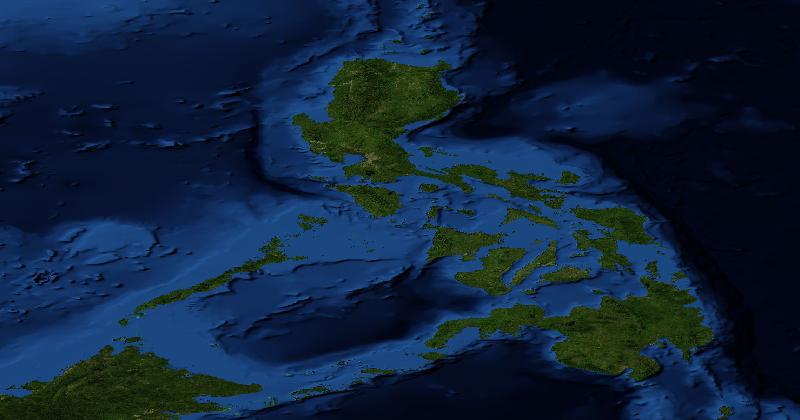
The Philippines consists of 7,641 islands scattered across roughly 300,000 square kilometres of the western Pacific, between Taiwan to the north and Indonesia and Malaysia to the south. The country is divided into three main island groups — Luzon in the north, the Visayas in the middle, and Mindanao in the south — plus thousands of smaller islands and reefs. The Philippines sits on the Pacific Ring of Fire, with 23 active volcanoes, frequent earthquakes, and some of the most dynamic geology on Earth.

For geography games, the Philippines shows up regularly and has aerial signatures distinctive enough to lock in quickly once you know what to look for. This guide walks through the cues that identify the country and tell you which of the three island groups you have landed on.

The Island Scatter: A Defining Aerial Signature

The Philippines has one of the most distinctive island distributions on Earth. Unlike Indonesia (which has a few enormous islands plus thousands of small ones), Japan (which has four main islands in a tight chain), or Greece (whose islands cluster in the Aegean), the Philippines has a roughly continuous scatter of small-to-medium islands across a large area of ocean, with no single island dominating. From orbit at high altitude, the Philippine archipelago looks like a shower of green dots across the South China Sea and Philippine Sea, with the larger islands (Luzon, Mindanao, Palawan, Samar, Negros, Panay, Leyte, Mindoro, Cebu, and Bohol) standing out but no clear hierarchy.

If a satellite frame shows a small island or two with characteristic tropical vegetation, brilliant turquoise reef water, and small coastal settlements, you may be looking at the Philippines, Indonesia, or one of the other Southeast Asian archipelagos. The disambiguators are usually specific. Philippine islands tend to be more mountainous than most Indonesian equivalents, with central spines of forested hills rising to 1,000 metres or more, narrow coastal plains, and small rivers running quickly to the sea. The settlement patterns and reef structures also differ.

Volcanoes Visible from Orbit

The Philippines has some of the most distinctive volcanic landscapes on Earth. Mayon Volcano in Albay province on Luzon has been called the most perfectly conical volcano in the world — visible from orbit as a near-perfect symmetrical cone rising from a flat coastal plain to 2,463 metres, with characteristic radial drainage patterns down its slopes. Taal Volcano south of Manila is a complex volcano in the centre of Taal Lake, itself a caldera, with the volcanic island visible inside the lake which is itself surrounded by a low ring of caldera walls — one of the more recognisable single features from orbit.

Mount Pinatubo on Luzon erupted catastrophically in 1991, and from orbit you can see the deep caldera lake at the summit and the surrounding lahar deposits that buried thousands of hectares of farmland. Mount Apo on Mindanao is the tallest peak in the country at 2,954 metres. The volcanic landscapes of Camiguin Island near Mindanao, the Babuyan islands north of Luzon, and many smaller islands across the country all have distinctive cone or caldera shapes. The pattern of cone-shaped volcanoes scattered across tropical islands is one of the strongest Philippines signals available.

Philippine landscape with islands and turquoise water
The Philippines' scattered islands, perfect volcanic cones, and brilliant reef waters produce a uniquely recognisable aerial signature.

Rice Terraces and Coconut Country

The Philippines has some of the most photographed agricultural terracing on Earth. The Banaue, Batad, and Mayoyao rice terraces in the Cordillera mountains of northern Luzon were carved by hand into mountain slopes over 2,000 years ago by the Ifugao people and are now UNESCO World Heritage sites. From orbit, they appear as intricate stepped patterns following the contours of steep mountains, with characteristic small villages tucked into the few flat areas. The terraces are similar in style to those in Yunnan, Vietnam, or Indonesia but occupy specific mountain valleys distinctive enough to recognise once you have studied them.

Lowland Philippine agriculture is dominated by rice in the major plains (the central Luzon plain, the eastern Visayas plains, the Cotabato basin in Mindanao) and coconut plantations across most of the lower-elevation islands. Coconut groves from orbit have a distinctive aerial signature — regularly spaced individual trees in geometric grids, often covering entire islands or large coastal stretches, with shadows that produce a characteristic dotted pattern at close zoom. Sugar cane is dominant in Negros (the "sugar bowl" of the Philippines), pineapple in Mindanao, and banana plantations are scattered across many of the southern islands.

The Reef Waters and Coastlines

Philippine coastal waters contain some of the most diverse marine ecosystems on Earth — the country sits at the centre of the Coral Triangle and has more reef fish species than anywhere else. From orbit, this manifests as brilliantly coloured shallow water around almost every island, with characteristic patches of turquoise (reef flats), darker blue (deeper channels), and emerald green (dense seagrass and mangrove). The reef patterns are essentially unique to tropical Pacific and Indian Ocean countries, but Philippine reefs are particularly extensive and varied.

Some specific coastal features are highly recognisable. The Chocolate Hills of Bohol — over 1,000 grass-covered limestone mounds that turn brown in the dry season — produce a distinctive textured pattern unique to that island. The Hundred Islands National Park near Lingayen Gulf is a cluster of small mushroom-shaped limestone islands visible from orbit as a tight scatter of round green dots. Palawan, the long thin island in the southwest, has dramatic limestone cliffs at El Nido and Coron, with characteristic karst sea-stacks visible from satellite altitude. The Sulu Archipelago in the far southwest forms a thin chain of small islands stretching toward Borneo.

Philippine Cities

Metro Manila is by far the largest urban area in the Philippines, with roughly 13 million people in the metropolitan area and over 25 million in the broader Mega Manila region. From orbit, the city is unmistakable — a vast dense urban area on the western coast of Luzon, wrapped around Manila Bay with the historic Intramuros walled city visible on the bay's eastern shore, the new business districts of Makati, Bonifacio Global City, and Ortigas extending east, the airport at Pasay, and the satellite cities of Quezon City, Pasig, and Caloocan stretching far north and east. The Pasig River winds through the urban area, and the urban edge bleeds into surrounding agricultural land in often unplanned patterns.

Cebu City is the second-largest urban area, sitting on the east coast of Cebu Island with a distinctive port and the historic Magellan's Cross at the centre. Davao City on Mindanao is the largest city in the south, sprawling along a wide bay below Mount Apo. Iloilo, Cagayan de Oro, Zamboanga, Bacolod, and other regional centres have their own characteristic footprints. Philippine cities are generally dense, low-to-mid-rise, with a mix of well-planned business districts and extensive informal settlements (squatter areas) at their edges.

Regional Tells

  • Luzon north: rice terraces of the Cordillera, the Ilocos coast, Cagayan Valley, and the volcanoes of the Bicol region.
  • Luzon central: Manila and its sprawl, the central Luzon rice plain, the volcanoes of Pinatubo and Taal, and the Sierra Madre on the east coast.
  • Luzon south: the Bicol Peninsula with Mayon Volcano, the Camarines provinces, and the Catanduanes coast.
  • Visayas: the cluster of medium-sized islands including Cebu, Bohol, Negros, Panay, Leyte, and Samar.
  • Mindanao: the largest southern island with Davao, Cagayan de Oro, Zamboanga, the Cotabato basin, the Sulu Sea coast, and Mount Apo.
  • Palawan: long thin island in the southwest with limestone cliffs, the Puerto Princesa subterranean river, and the El Nido archipelago.
  • Sulu Archipelago: chain of small islands stretching from Mindanao toward Borneo.

Where the Philippines Gets Confused

The Philippines can be confused with Indonesia, Malaysia, Taiwan (only for the northernmost islands), Vietnam, or even parts of Papua New Guinea. The disambiguators are usually specific: the unique scatter pattern of the Philippine islands, the distinctive cone-shaped volcanoes (more numerous and more perfectly shaped than Indonesian equivalents on average), the Spanish-colonial era road networks and town plans (with characteristic plaza-and-church layouts), and the specific reef and coastal patterns. Indonesian islands tend to be larger and more elongated; Malaysian Borneo has different vegetation and far fewer volcanoes; Taiwan has a single large central mountain spine rather than scattered islands.

Pro-Tier Signals

Advanced players use finer details. The specific shape of Filipino Spanish-colonial era town plans, with characteristic central plazas, baroque churches, and gridded streets dating to the 16th and 17th centuries. The pattern of bahay kubo and bahay na bato traditional houses in older neighbourhoods. The distinctive colour and arrangement of Filipino fishing fleets — bright bancas (outrigger canoes) visible at close zoom in nearly every harbour and bay. The shape of Philippine sugar mill complexes in Negros, with characteristic smokestacks and stockpiles. The signature of Philippine pineapple plantations in northern Mindanao, particularly the Del Monte and Dole plantations, which appear as enormous rectangular geometric patches in otherwise rugged terrain. And the specific shape of Filipino fish pens and aquaculture ponds visible in many coastal areas, particularly the Laguna de Bay area near Manila.

Practise It

The Philippines is one of the more rewarding Southeast Asian countries to learn for geography games because of the variety of island landscapes and the distinctiveness of the volcanic and reef signatures. Spend a focused session on EarthGuessr playing Philippine rounds and the country will quickly become one of the more reliable identifications across the western Pacific — and the differences between Luzon, the Visayas, and Mindanao will let you narrow your guess to a specific region within seconds.

Series · Spot the Country

More from this series

View all in Spot the Country →

Ready to explore?

See the world from above and test your geography skills on a 3D globe.